

São Jorge Castle Ramparts & Towers Guide
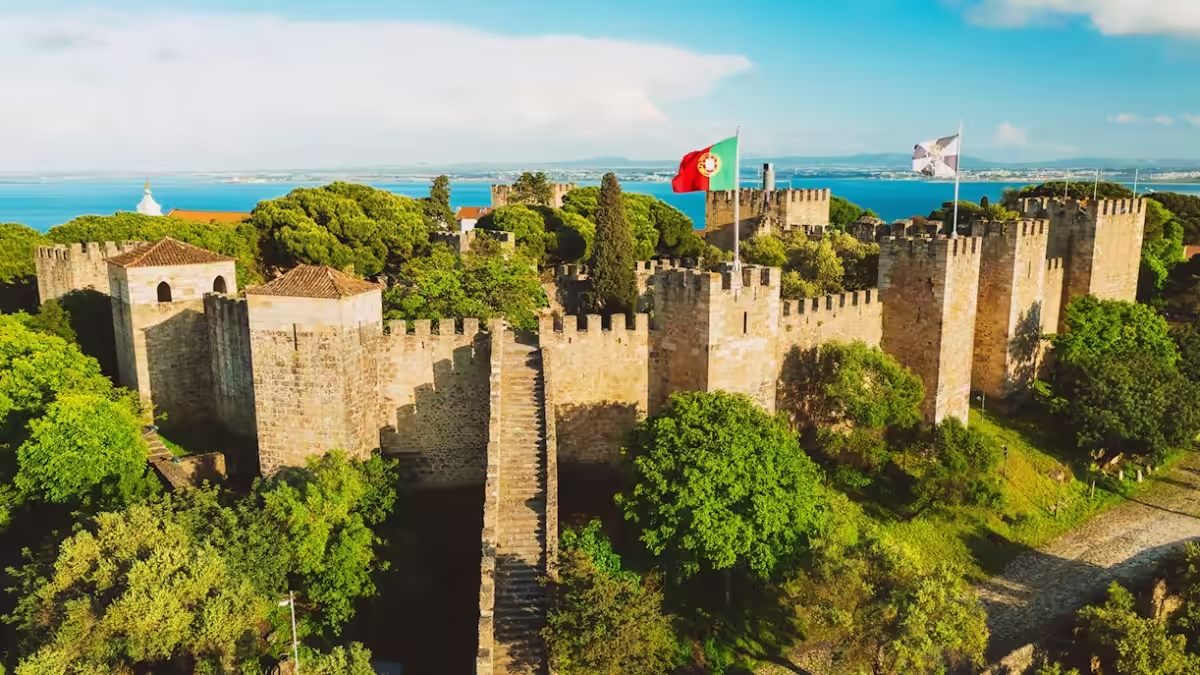
The ramparts of São Jorge Castle are walkable battlements linking its eleven towers around the hilltop, offering the best panoramas over Lisbon and the Tagus. The full circuit takes about 30–45 minutes at an easy pace. The walkways are largely unguarded, with steep stone steps and open drops, so wear grippy shoes and supervise children closely. The Tower of Ulysses, home to the Camera Obscura, anchors the best viewpoints.
The walls are the reason most people climb the hill. São Jorge Castle’s ramparts wrap the summit in a near-continuous walkway, stringing together eleven towers and opening, at almost every turn, onto a view over the terracotta rooftops of Alfama, the grid of the Baixa and the wide silver curve of the Tagus. Walking them is the heart of a visit — part history, part balcony above the whole of Lisbon.
This guide covers what the ramparts are, how to walk them, the eleven towers and the standout Tower of Ulysses, the best viewpoints and the best circuit to follow, plus an honest word about the steps, the drops and where care is needed underfoot.
The Ramparts & Towers at a Glance
| Feature | Detail |
|---|---|
| Towers | 11 around the fortified circuit |
| Wall walk | Largely continuous, walkable battlements |
| Circuit time | About 30–45 minutes at an easy pace |
| Standout tower | Tower of Ulysses (houses the Camera Obscura) |
| Terrain | Steep stone steps, uneven surfaces, open drops |
| Best light | Early morning and the hour before sunset |
What the Ramparts Are
The ramparts are the castle’s defensive walls, topped by a walkway that once let sentries patrol the whole perimeter. Today that walkway is open to visitors, running between the eleven towers around the summit. It is the highest continuous vantage point in the old city and the single best place to take in Lisbon from above.
The ramparts are the curtain walls that ring the castle’s inner citadel, and their crowning walkway — the wall-walk once used by guards — is what you follow today. Built in their surviving form by Moorish engineers in the mid-11th century, they were designed to defend the top of the walled city. Now they serve a gentler purpose: a raised path around the summit with the city spread out below.
Because the castle sits on the highest hill in the historic centre, the wall-walk delivers a genuinely commanding sweep. You look down on the Alfama’s tangled lanes, across the Baixa to the river, and out to the 25 de Abril Bridge. To understand how these walls came to be, our guide to the history of São Jorge Castle sets out the full story.
The Eleven Towers
The fortified circuit is punctuated by eleven towers, each a strongpoint in the original defences and, today, a natural pause on the walk. Some are squat and solid, others taller with rooms inside; several frame particular views, so that moving from one to the next changes the panorama each time. The towers are what give the ramparts their rhythm — you climb, cross a stretch of wall, reach a tower, and the city rearranges itself in front of you.
The most famous of the eleven is the Tower of Ulysses, which houses the castle’s Camera Obscura. It’s worth planning your circuit around this one, as the device runs only in daylight and suitable weather.
The Tower of Ulysses & the Camera Obscura
The Tower of Ulysses is the tallest and most notable of the eleven towers. Inside it, the Camera Obscura projects a live, moving 360-degree image of Lisbon onto a dish, narrated in short guided sessions that depend on daylight and clear weather. It also offers some of the finest open viewpoints on the whole circuit, so it makes a natural high point of a rampart walk.
The Tower of Ulysses stands out both for its height and for what it holds. Within it, the Camera Obscura uses a periscope of lenses and mirrors to cast a live, moving picture of the surrounding city onto a concave surface, while a guide points out landmarks in real time. The sessions are weather-dependent and run through the day, so if this is a priority, come earlier rather than at closing.
Even setting the optics aside, the tower and the walls beside it give some of the best sightlines on the circuit. It’s a sensible place to aim for and to spend a little longer.
The Best Circuit
There’s no single mandatory route, but the ramparts reward walking the loop in one direction so you don’t double back through crowds. From the main courtyard, the Praça de Armas with its cannons and the statue of Afonso Henriques, step up onto the walls and follow them round, taking each tower as it comes and finishing near the Tower of Ulysses. Allow around 30 to 45 minutes for the full loop at an unhurried pace, more if you stop often for photos.
Timing matters as much as route. The walls are busiest in the hour before sunset, when everyone comes up for the light, and quietest soon after the 9:00 opening. For the clearest photographs and the calmest walk, our guide to the best time to visit São Jorge Castle helps you pick your window, and the best photo spots guide points you to the strongest views.
Steps, Drops & Staying Safe
The ramparts are largely unguarded, with steep, worn stone steps, narrow stretches and open drops in places. There are few railings. The surfaces are uneven and can be slippery when wet. Wear grippy, flat shoes, watch your footing, and keep young children within reach at all times. Much of the wall-walk is not step-free and is difficult for wheelchairs, prams and limited mobility.
This is a medieval fortress, not a modern viewing platform, and it’s honest to say so. The wall-walk includes steep stone staircases, sections without handrails, and edges with real drops on one or both sides. The stone is worn smooth in places and turns slippery after rain. None of this makes the ramparts dangerous for a careful adult, but it does demand attention.
Sensible footwear matters more here than anywhere else on the site — flat shoes with grip, not sandals or smooth soles. If you’re visiting with children, the walls, towers and cannons are a real draw, but the drops mean close supervision throughout; our guide to visiting São Jorge Castle with kids covers this in more detail. Anyone with mobility concerns should know the full circuit is not step-free — see our accessibility guide before you go.
Frequently Asked Questions
How many towers does São Jorge Castle have?
The castle has eleven towers set around its fortified circuit. Each was a strongpoint in the original Moorish defences, and together they punctuate the wall-walk you follow today. The best known is the Tower of Ulysses, which houses the Camera Obscura and offers some of the finest viewpoints on the whole circuit.
Can you walk on the walls of São Jorge Castle?
Yes. The ramparts are open to visitors as a largely continuous walkway linking the towers around the summit. It’s the highlight of most visits, giving panoramic views over Alfama, the Baixa and the Tagus. The walkway is unguarded in places with steep steps and open drops, so wear grippy shoes and take care with your footing.
How long does it take to walk the ramparts?
The full circuit takes roughly 30 to 45 minutes at an easy pace, though most people spend longer because they stop so often for photos and to take in each tower’s view. A complete castle visit, including the ramparts, courtyard, archaeological site and Camera Obscura, usually runs to about 1.5 to 2 hours.
Are the ramparts safe for children?
The walls, towers and cannons genuinely appeal to children, but the ramparts have open drops, steep steps and few railings, so close supervision is essential throughout. Keep young children within arm’s reach on the wall-walk. Prams and buggies are hard work on the steps and cobbles. The walls, towers and cannons still make it a rewarding stop for families who take it slowly.
What is the Tower of Ulysses?
The Tower of Ulysses is the tallest of the eleven towers and the one that holds the Camera Obscura, a periscope of lenses and mirrors projecting a live 360-degree image of the city. It also provides some of the best open viewpoints on the ramparts, which makes it a natural high point to aim for as you walk the circuit.
Are the ramparts wheelchair accessible?
Largely no. The wall-walk involves steep stone steps, narrow passages and uneven surfaces, and the full circuit is not step-free. Some level viewpoints and the main courtyard can be reached, but the ramparts themselves are difficult or impossible for wheelchair users and hard for prams. It’s worth confirming current provision with the castle before you plan a visit around the walls.
When are the ramparts least crowded?
The quietest time is soon after the 9:00 opening, before the tour groups arrive, when the light is also good for photographs. The busiest is the hour before sunset, when the walls fill with people waiting for the view. Weekdays are calmer than weekends year-round.
What can you see from the walls?
The ramparts look out over the terracotta rooftops of Alfama, across the Baixa’s grid to the river, and along the Tagus to the 25 de Abril Bridge. On a clear day the sweep takes in much of central Lisbon at once. The umbrella pines and the castle’s peacocks make good foreground for photographs from several points on the circuit.
Do you need a special ticket for the ramparts?
No. Access to the ramparts and towers is included in standard castle entry — there’s no separate charge. An entry ticket with audio guide covers the walls, the towers, the Camera Obscura sessions and the rest of the site. If you’d like the walls explained as you go, a live guided tour adds a historian’s commentary.
