

São Jorge Castle Permanent Exhibition & Museum
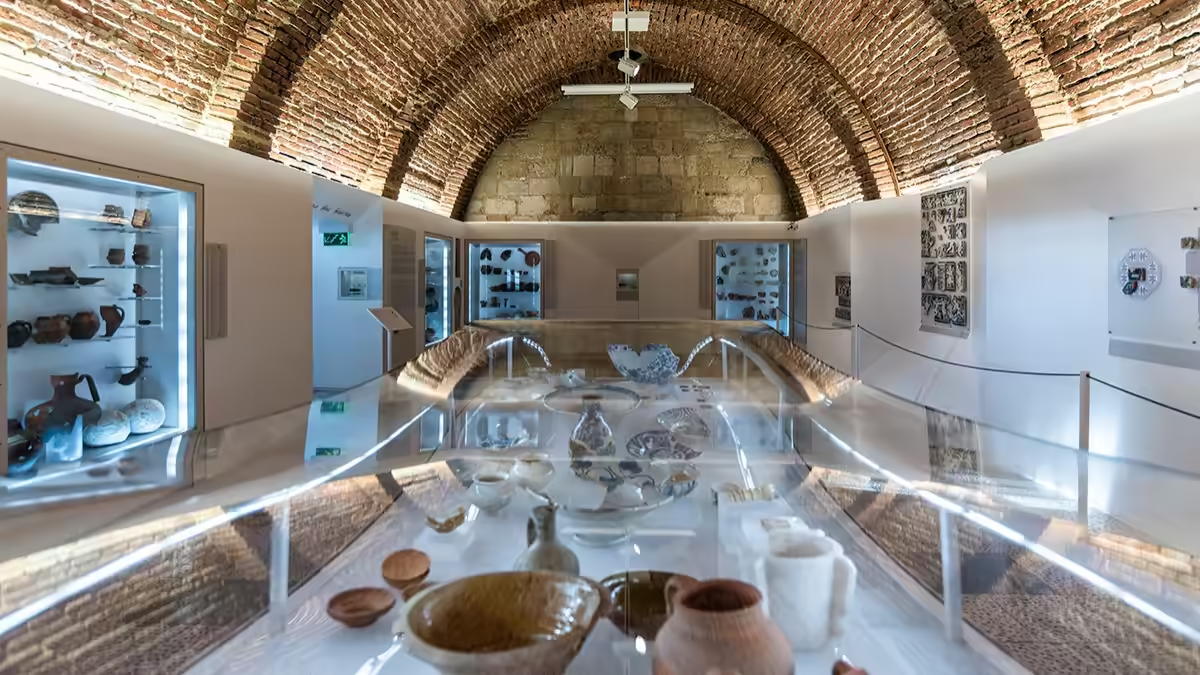
The permanent exhibition at São Jorge Castle is a small museum displaying artefacts excavated on the hilltop itself, spanning the Iron Age, the Moorish period and medieval times. It frames the long occupation of São Jorge hill through the objects people left behind, from pottery to everyday items. It sits beside the archaeological site and is included in standard admission — allow around 20 to 30 minutes.
It would be easy to treat São Jorge Castle as pure spectacle — climb the walls, take the photo, move on. But the hill has been lived on for more than two thousand years, and the permanent exhibition is where that depth becomes tangible. Instead of grand galleries, you get a focused collection of things dug from the ground beneath your feet: fragments that turn the abstract history of the castle into objects you can stand in front of.
This guide explains what the exhibition holds, how it frames the hill’s long story, where to find it on site, how long to give it, and why it pairs so well with the castle’s audio guide.
What the Exhibition Displays
The exhibition displays artefacts excavated on the São Jorge hilltop, covering the Iron Age, the Moorish period and the medieval centuries. Expect pottery and ceramics, everyday household items, and fragments of the structures that once stood here, rather than crown jewels or grand treasures. The objects are drawn from the castle’s own archaeological digs, so everything on show was found on the site itself.
The strength of the collection is not that any single piece is dazzling, but that all of it comes from this one hill. You move through cases of ceramics and pottery sherds, pieces of everyday life, and fragments of building material and decoration that survived the centuries in the soil. Together they document how successive communities — Iron Age settlers, the long era of Moorish Lisbon, and the medieval Portuguese court — occupied and reshaped the same ground.
Because the material is local and layered, the exhibition reads almost like a core sample of Lisbon’s past. A glazed Moorish fragment, a piece of Iron Age pottery and a medieval object can sit within a few paces of each other, each speaking for a different chapter of the hilltop. It is managed by EGEAC, Lisbon’s municipal culture company, which also runs the wider castle site.
How the Exhibition Frames the Hill’s History
The exhibition frames São Jorge hill as a place of continuous occupation for more than two thousand years, using excavated objects to show how the Iron Age settlement, Moorish citadel and medieval royal palace succeeded one another on the same summit. Rather than telling the story through kings and battles alone, it tells it through the material traces of daily life, which is what makes the long chronology feel real.
The interpretation deliberately widens the lens beyond the castle’s military and royal fame. Yes, this was a Moorish stronghold and later the seat of Portuguese kings, but the exhibition reminds you that people were building, cooking and trading here long before any of that. The Iron Age origins, the Roman and Visigothic presence, the centuries of Moorish rule and the medieval palace era are shown as one connected sequence rather than isolated highlights.
That framing pays off when you walk the rest of the site. Once you have seen the objects, the archaeological site outside stops being an anonymous field of stone and becomes legible: you can match the excavated remains to the periods the exhibition has just introduced. The same is true of the medieval palace ruins, whose bare foundations gain their human detail from the household objects on display indoors.
Where the Exhibition Sits on Site
The permanent exhibition is set within the castle grounds beside the archaeological zone and the medieval palace remains, on the side of the hilltop away from the main rampart circuit. This is deliberate: the museum, the dig and the palace ruins form a single cluster, so you can move between the objects and the ground they came from without crossing the whole site.
Practically, that means it is easy to fold into a natural loop of the castle. Many visitors walk the walls and take in the panorama first, then come inland to the archaeological area, where the exhibition, the excavations and the palace foundations sit together. Signage across the wider castle is limited, so if you are keen not to miss it, follow the site map from the entrance or ask staff to point you towards the archaeological site and exhibition.
Because it is indoors, the exhibition also makes a good pause on a hot summer afternoon or in poor weather, when the exposed ramparts are less inviting. It is a shaded, calmer counterpoint to the walls and terraces where the peacocks and gardens are.
How Long to Spend
Most visitors spend around 20 to 30 minutes in the permanent exhibition, enough to take in the artefacts and read the interpretation without rushing. If you are interested in archaeology or history you might stay 45 minutes; if you are short on time, even 15 minutes adds real context to the rest of the castle. Factor it into a full visit of roughly 1.5 to 2 hours overall.
The exhibition is compact, and that is part of its appeal — it does not demand a museum-length commitment. Give it 20 to 30 minutes and you will come away with the framework that makes the whole hilltop make sense. Those with a deeper interest in the Iron Age, Moorish Lisbon or the medieval court can happily linger longer over the detail.
If your time at the castle is tight, it is still worth a quick look rather than skipping it entirely, because the payoff per minute is high: a short pass through the cases sharpens everything you see outside. A full castle visit runs to about 1.5 to 2 hours, and the exhibition is a modest but rewarding slice of that.
Pairing the Exhibition With the Audio Guide
The exhibition and the castle’s audio commentary are natural partners, because each fills a gap the other leaves. The objects give you the physical evidence; the entry ticket and audio guide gives you the running narrative that ties those objects to the walls, towers and palace outside. Used together, they turn a collection of sherds into a coherent account of the hill.
This matters more here than at many attractions because on-site signage is sparse. Standing in the exhibition, the commentary helps you connect a Moorish fragment in a case to the Moorish walls you walked earlier, or a medieval object to the royal palace next door. If you prefer your history delivered by a person who can answer questions, a Castle Guided Tour covers the same ground, weaving the exhibition into the wider story of the site. Either way, do not treat the exhibition as an add-on; it is the key that unlocks the rest.
Frequently Asked Questions
What is in the permanent exhibition at São Jorge Castle?
The exhibition displays artefacts excavated on the castle hilltop, spanning the Iron Age, the Moorish period and medieval times. You will see pottery and ceramics, everyday household items and fragments of the structures that once stood here. Everything on show was found on the site itself, which is what gives the collection its coherence rather than any single showpiece object.
Is the exhibition included in the ticket?
Yes. The permanent exhibition is part of standard castle admission, alongside the ramparts, the archaeological site and the medieval palace ruins. There is no separate charge. Children up to 12 enter free and Lisboa Card holders are admitted free, so anyone visiting the castle can see the exhibition as part of their visit.
Where is the exhibition located within the castle?
It sits inland from the main rampart circuit, beside the archaeological site and the medieval palace ruins, so the museum, the dig and the palace foundations form one cluster. Signage across the castle is limited, so follow the site map from the entrance or ask staff to point you towards the archaeological area if you want to be sure of finding it.
How long does it take to visit?
Most people spend around 20 to 30 minutes, which is enough to see the artefacts and read the interpretation at a comfortable pace. Those keen on archaeology or history might stay 45 minutes, while a quick 15-minute pass still adds useful context. It fits easily within a full castle visit of about 1.5 to 2 hours.
Is it worth seeing, or should I skip it?
It is well worth a look, even a brief one. The exhibition is what makes the rest of the hilltop legible: once you have seen the excavated objects, the archaeological site and palace ruins outside make far more sense. If you only have time for a short visit, a few minutes here sharpens everything else you see across the castle.
How does the exhibition relate to the archaeological site?
The two are directly connected. The exhibition shows the artefacts that excavation of the archaeological site produced, so the objects indoors came out of the ground just outside. Seeing them together lets you match the finds to the Iron Age, Moorish and medieval layers exposed in the dig, and to the foundations of the medieval palace ruins beside it.
Is the exhibition suitable for children?
It can be, though it is a fairly quiet, object-focused display rather than a hands-on museum, so younger children may prefer the walls, cannons and peacocks outside. Under-12s enter free, and a short visit can work as a calm, shaded break from the exposed ramparts. Pairing a few objects with the story of the kings who lived here can help hold their interest.
Does the audio guide cover the exhibition?
The audio guide that comes with the standard entry ticket covers the castle’s history and helps connect the exhibition’s artefacts to the walls, towers and palace outside. Because on-site signage is limited, the commentary is especially useful here for tying the objects to the periods they belong to. A guided tour offers the same context delivered in person.
