

São Jorge Castle Camera Obscura Guide
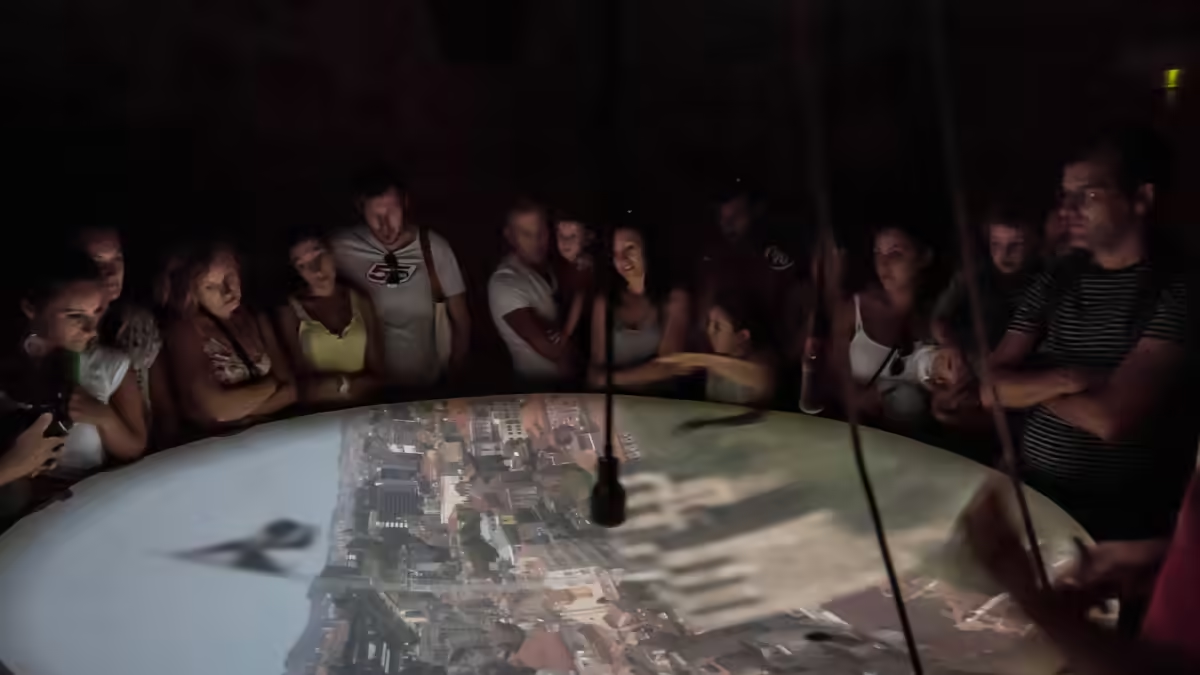
The Camera Obscura at São Jorge Castle sits inside the Tower of Ulysses. Using a periscope of lenses and mirrors, it projects a live, moving 360-degree image of Lisbon onto a concave dish while a guide narrates. Sessions run through the day, last around 20 minutes, and are included in your castle entry. They depend on daylight and clear weather, so come earlier in the day rather than at closing to be sure of catching one.
Of everything inside São Jorge Castle, the Camera Obscura is the one that surprises people. Hidden at the top of the Tower of Ulysses, it turns a darkened room into a live cinema of the city outside: rooftops, ships on the Tagus, planes overhead and pedestrians in the streets below, all projected in real time onto a great white dish while a guide swings the optics around Lisbon. It is old technology doing something that still feels a little magical.
This guide explains how the Camera Obscura works, what happens in a session, when it runs across the seasons, the fact that it’s included in your entry, and the practical tips for making sure you actually catch it on the day you visit.
The Camera Obscura at a Glance
| Detail | Information |
|---|---|
| Location | Tower of Ulysses, inside the castle |
| What it does | Projects a live 360° image of Lisbon |
| How it works | Periscope of lenses and mirrors |
| Session length | About 20 minutes, guided |
| Cost | Included in castle entry |
| Runs | Daytime only, weather-dependent |
How the Camera Obscura Works
A camera obscura is a darkened room with a small opening that lets light in to project the scene outside, upside down, onto a surface. The version at São Jorge Castle improves on the principle with a periscope of lenses and mirrors on the tower roof. It gathers light from all around, focuses it through the optics, and casts a sharp, full-colour, moving image of Lisbon onto a concave white dish in the room below.
The camera obscura — Latin for “dark chamber” — is one of the oldest principles in optics. Light passing through a small hole into a dark space throws an inverted image of the outside world onto the far wall. The device in the Tower of Ulysses refines that ancient idea with a rotating periscope of lenses and mirrors mounted on the roof of the tower.
The periscope collects light from the city in every direction and channels it down through the lens system onto a shallow, dished screen at waist height. Because the optics can be turned and tilted, the guide can sweep the view right around the horizon and zoom in on distant details — a ship mid-river, traffic on the 25 de Abril Bridge, washing hanging in an Alfama courtyard. Everything moves, live, in full colour, because you are literally watching focused daylight rather than a recording.
What Happens in a Session
Sessions are guided and last around 20 minutes. You gather in the darkened room with a small group, your eyes adjust, and the guide begins to work the periscope, panning across Lisbon and narrating what appears on the dish. Because the image is live, part of the fun is the unpredictability: a tram climbing a hill, gulls wheeling past, a plane on approach. The guide points out the major landmarks and explains how the optics achieve the effect.
The commentary is usually given in Portuguese and English, though this can vary. It’s an easy, seated-pace experience and a welcome cool, shaded break after the sun and the steps of the ramparts and towers outside.
Session Times & Seasons
The Camera Obscura runs daytime sessions only, because it needs daylight to work, and they finish well before the castle closes. Sessions run longer into the day in summer, when there is more light, and are shorter in the darker winter months. Times can also be cut short or cancelled in cloudy or wet weather, so always check the day’s schedule at the ticket office when you arrive.
The Camera Obscura keeps its own hours, separate from and shorter than the castle’s. It operates through the daylight part of the day and stops well before the gates close, so it is not something you can catch on a late-evening summer visit. In high summer the sessions run longer and later; in winter, with less daylight, the window is noticeably shorter.
Weather is the other variable. The device relies on bright, clear daylight to cast a crisp image, so on heavily overcast or rainy days sessions may be dimmer, shortened or suspended altogether. There is no fixed year-round timetable to memorise — the reliable move is to ask at the ticket office for the day’s session times as soon as you arrive. Our guide to São Jorge Castle opening hours explains how these shorter hours fit the castle’s wider schedule.
Included in Your Entry
The Camera Obscura is not a separate attraction with its own ticket — it is included in standard castle admission at no extra cost. Any valid entry covers it, whether you arrive on a plain ticket, an entry ticket with audio guide, a Lisboa Card or a guided tour. The only thing that decides whether you see it is timing and weather, not what you paid.
That makes it one of the better-value things to do inside the walls, and a reason to build a little slack into your visit so you can fit a session around walking the walls and seeing the rest of the site.
Tips for Catching It
To be sure of seeing the Camera Obscura, arrive earlier in the day rather than near closing, since sessions end well before the castle does. Check the day’s times at the ticket office the moment you enter, then plan your rampart walk around them. Pick a bright, clear day if you can, as heavy cloud or rain can shorten or cancel sessions.
The single most useful tip is to treat the Camera Obscura as a fixed point to plan around, not an afterthought. Because its sessions finish long before the castle closes, an evening or sunset-focused visit can miss it entirely. Come earlier in the day, and the moment you’re through the gate, check the session times posted at the ticket office.
A few more things help. Aim for a clear, bright day, since the effect is at its best in strong daylight and can be washed out by heavy cloud. Arrive a little before a session starts, as the room holds only a small group at a time. And keep an eye on the weather forecast if the Camera Obscura is a priority for you — pairing it with a bright morning is the surest way to see Lisbon come alive on the dish. For choosing that window, see our guide to the best time to visit São Jorge Castle.
Frequently Asked Questions
What is the Camera Obscura at São Jorge Castle?
It’s an optical device inside the Tower of Ulysses that projects a live, moving 360-degree image of Lisbon onto a concave dish in a darkened room, with a guide narrating. Using a periscope of lenses and mirrors on the tower roof, it shows the real city outside in real time — rooftops, the river, traffic and passers-by — rather than any recording or screen.
How does the Camera Obscura work?
It applies the ancient camera obscura principle: light from outside is channelled into a dark room to form an image. A rotating periscope of lenses and mirrors on the roof of the Tower of Ulysses gathers daylight from all directions, focuses it through the optics, and casts a sharp, full-colour, live picture of Lisbon onto a dished white screen below, which the guide pans across the city.
Is the Camera Obscura included in the ticket?
Yes. It’s included in standard castle entry at no extra charge, whatever ticket you hold — a plain entry, an entry ticket with audio guide, a Lisboa Card or a guided tour. There is no separate booking or fee for the Camera Obscura itself. Whether you see it depends only on the session times and the weather on the day.
What time does the Camera Obscura run?
It runs daytime sessions only, since it needs daylight, and they end well before the castle closes. Sessions run longer into the day in summer and are shorter in winter, so there’s no single fixed timetable. Check the day’s times at the ticket office as soon as you arrive, and plan the rest of your visit around them.
How long is a Camera Obscura session?
Each guided session lasts about 20 minutes. You gather in the darkened room with a small group while the guide works the periscope, sweeps the view around Lisbon and points out landmarks. It’s an easy, seated-pace experience and a cool, shaded break from the sun and steps of the walls outside.
Does the Camera Obscura work in bad weather?
Not reliably. The device depends on bright, clear daylight to cast a crisp image, so on heavily overcast or rainy days sessions may be dimmer, shortened or suspended entirely. If seeing it matters to you, aim for a clear, bright day and check with the ticket office on arrival whether sessions are running.
What language is the Camera Obscura session in?
Sessions are guided and the commentary is usually given in Portuguese and English, though this can vary by session and staff. The visual experience needs no translation — the live image of the city speaks for itself — but the guide’s explanation of the landmarks and the optics adds a lot, so it’s worth catching a session in a language you follow.
Where is the Camera Obscura in the castle?
It’s housed at the top of the Tower of Ulysses, one of the castle’s eleven towers and among the tallest. The tower also offers some of the best open viewpoints on the wall circuit, so it’s a natural place to head for as you make your way round the battlements.
Is the Camera Obscura suitable for children?
Yes — many children find the live, moving image of the city genuinely captivating, and the short, seated session is an easy watch. The room is dark, which younger children should know to expect. It also makes a calm, shaded pause between the towers and the open ramparts, where drops and steps mean closer supervision is needed.
