

São Jorge Castle Peacocks & Gardens Guide
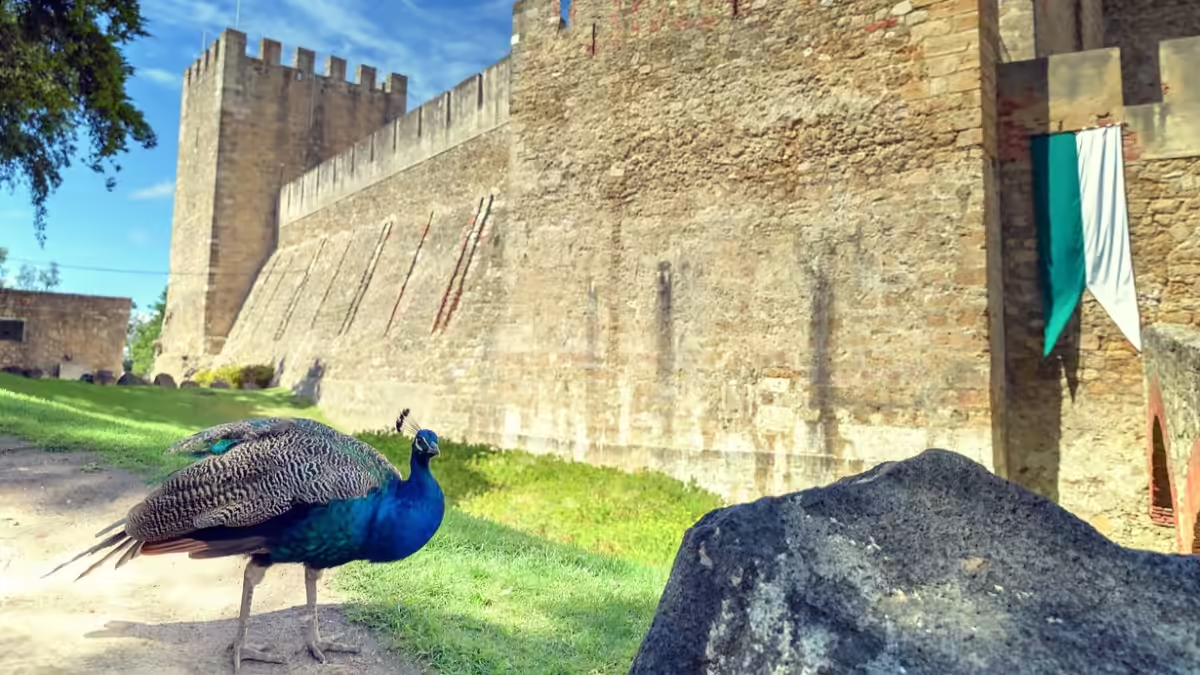
São Jorge Castle is home to a resident flock of free-roaming peacocks that wander the terraced gardens, lawns and viewpoints, often strolling right past visitors. You’ll find them most easily around the gardens near the entrance and under the umbrella pines, where they shelter and display. They are wild and habituated rather than tame, so watch and photograph them but don’t feed or chase them.
Alongside the ramparts and the river views, the thing that surprises most first-time visitors to São Jorge Castle is the peacocks. A flock of them lives on the hilltop, roaming the gardens and terraces freely, and their cries carry across the whole site. For families especially, the birds are as much a highlight as the walls.
This guide covers where to find the peacocks, what the gardens and pines are like, how to photograph the birds well, and the simple dos and don’ts that keep both you and them happy.
The Peacocks & Gardens at a Glance
| Detail | What to know |
|---|---|
| The birds | free-roaming resident peacocks and peahens |
| Best spots | gardens near the entrance, terraces, under the pines |
| Best time | early morning and late afternoon, when they’re active |
| Displays | males fan their tails most in spring |
| Golden rule | look and photograph, but don’t feed or chase |
The peacocks are part of the castle’s character rather than a caged attraction, so sightings aren’t guaranteed to order — but on most visits you’ll meet several without trying.
Where to Find the Peacocks
The peacocks roam freely across the castle grounds, but you’ll most reliably find them in the gardens and terraces near the entrance, on the lawns, and sheltering or roosting under the umbrella pines. They’re most active in the cooler early morning and late afternoon, and often perch up in the trees or on low walls, so look up as well as around.
The birds have the run of the hilltop, so your first peacock often appears within minutes of entering, picking across the gardens by the gate. The terraced lawns and the shaded areas beneath the pines are their favourite haunts, where they forage, rest and shelter from the midday sun. They also roost, so it’s worth glancing upward — a peacock silhouetted in a pine or balanced on a battlement is a common and rather grand sight.
They tend to be liveliest in the cooler parts of the day, early after opening and again in the late afternoon, retreating to shade when it’s hot. If you’re timing a visit partly around the birds, the same quiet early hours that suit them also give you the site at its calmest, as our guide to the best time to visit São Jorge Castle explains.
The Terraces, Gardens and Umbrella Pines
The gardens are terraced into the hilltop, stepping down and out towards the viewpoints, planted with the umbrella pines whose flat, spreading canopies are a signature of the Lisbon skyline. Their shade makes the gardens the most comfortable part of the castle on a hot day, and their shapes frame the panoramas beautifully. Benches and level paths make this a gentler, greener counterpoint to the exposed stone of the ramparts and towers.
This is the part of the site to slow down in. Between the pines the gardens open onto views over the Baixa and the Tagus, so you can watch the peacocks with the whole city spread behind them. It’s an easy, unhurried space that rewards simply sitting for a while, and one of the few genuinely restful corners of a busy monument.
Photographing the Peacocks
For the best peacock photos, come early or late when the light is soft and the birds are active, get down to their eye level, and be patient rather than chasing a shot. Wait for a male to fan his tail — most likely in spring — or frame a bird against the pines, the old walls or the city view behind. Keep a respectful distance and let them come to you.
The peacocks are used to people, so they’ll often wander close enough for striking photographs if you stay calm and still. Crouching to their eye level makes for far stronger images than shooting down at them, and the soft light of early morning or late afternoon flatters both the birds and the setting. The iridescent blues and greens of the males come alive in gentle light and look muddy in harsh midday sun.
The prize shot is a full tail display, when a male fans his train into a shimmering fan — most common in the spring breeding season, though not something you can summon on demand. Failing that, frame a bird against the umbrella pines, the weathered stone or the panorama over the river for a picture that says São Jorge Castle at a glance. For where those city backdrops are strongest, see our guide to the best photo spots at São Jorge Castle.
Dos and Don’ts Around the Birds
The peacocks are wild animals living in a public space, and a little courtesy keeps everyone safe. Do keep a respectful distance and let curious birds approach you rather than the other way round; do watch children closely, as a startled peacock can lash out with beak or claws; and do enjoy them quietly without crowding.
Don’t feed them, however tame they seem — human food harms their health and encourages aggressive begging that spoils the experience for the next visitors. Don’t chase, corner or grab at them for a photo, and don’t let children run at them. Treat them as you would any wild bird you’re lucky enough to see up close, and they’ll reward you by carrying on unbothered right in front of you. If you’re bringing little ones, our guide to visiting São Jorge Castle with kids has more on keeping a family visit smooth.
Frequently Asked Questions
Are there really peacocks at São Jorge Castle?
Yes. A flock of peacocks lives permanently on the castle grounds, roaming the gardens, terraces and viewpoints freely. They’re one of the castle’s best-loved features, especially with children, and their distinctive calls carry right across the hilltop. On most visits you’ll see several without any effort, often within minutes of entering.
Where can I see the peacocks?
They roam across the whole site, but you’ll most reliably find them in the gardens and terraces near the entrance, on the lawns and under the umbrella pines where they shelter and roost. Look upward as well as around, since they perch in the trees and on low walls. They’re liveliest in the cooler early morning and late afternoon.
Can I feed the peacocks?
No — please don’t feed them. Human food is bad for their health and teaches them to beg aggressively, which spoils the experience for other visitors and can make the birds a nuisance. Enjoy watching and photographing them instead, and let them forage naturally. Keeping a respectful distance is better for the birds and for you.
Are the peacocks dangerous?
They’re generally calm and used to people, but they are wild birds and will defend themselves if chased, cornered or grabbed, using a sharp beak and claws. Keep a sensible distance, don’t let children run at them, and never try to pick one up. Treated with respect they’re perfectly safe to be around and often wander close of their own accord.
When do the peacocks display their tails?
Males are most likely to fan their spectacular tail feathers during the spring breeding season, when they display to attract peahens. Outside spring you may still catch a partial display, but a full fan is far less common. It can’t be guaranteed on any given visit, so treat a display as a lucky bonus rather than something to wait around for.
What’s the best time to photograph them?
Early morning and late afternoon are best, when the light is soft and the birds are most active. Get down to their eye level, be patient, and frame them against the pines, the old walls or the city view for the strongest images. Harsh midday sun flattens the colour of their plumage, so the softer light at either end of the day pays off.
Are the gardens worth visiting on their own?
Yes. The terraced gardens and umbrella pines are among the most restful parts of the castle, with shade, benches and views over the Baixa and the Tagus. They make a gentle contrast to the exposed ramparts and are a good place to pause, especially on a hot day or with young children. Combined with the peacocks, they’re a highlight in their own right.
Are the gardens accessible?
The gardens have some level paths and benches, but reaching them still involves the steep, cobbled and uneven ground found across the castle, with occasional steps. Provision varies, so wheelchair users and visitors with limited mobility should check current access with the castle first. Our accessibility guide covers the terrain across the whole site.
Do I need a special ticket to see the peacocks and gardens?
No. The peacocks and gardens are part of the main castle grounds and included in standard entry, so there’s no separate charge. The entry ticket with audio guide is the simplest way in for independent visitors, and the same ticket covers the ramparts, towers and archaeological site too.
